
Ask three operators how often their vapor recovery unit gets serviced and you will often get three answers, none written down. The honest reply is that service frequency is engineered, not guessed: it follows from how hard the unit works, what it breathes and where it stands. A framework beats a calendar, and the framework below is the one field engineers actually apply.
What drives the interval
Three variables dominate. Duty hours: a unit running through every unloading event at a busy terminal accumulates hours far faster than one serving a quiet station. Inlet condition: hot climates, foamy deliveries and dusty air all load the separation and cooling stages sooner. And product mix: heavier blends shift more condensate and foul elements faster. Two identical units on paper can therefore deserve quite different intervals in practice.
A starting framework, then adjust
| Service layer | Typical starting interval | Signals it needs shortening |
|---|---|---|
| Visual round and drains | Daily or per shift on manned sites | Condensate pooling between rounds |
| Element and filter checks | Monthly to quarterly | Differential pressure trending up between checks |
| Pump and drive inspection | Quarterly to half-yearly | Rising current draw, noise or heat trends |
| Membrane stage review | Half-yearly | Recovery purity drifting from its set point |
| Full strip-down and calibration | Yearly | Any trend the lighter layers cannot explain |
Let the logs set the real interval
The framework only becomes engineering when logs close the loop. Each service records what was found, and the findings move the next date:
- Log duty hours and condensate volume at every service, not just the date;
- Compare elements and drains against the previous visit, in writing;
- Shorten the interval when findings repeat at the edges of their limits;
- Lengthen it, cautiously, when several consecutive visits find everything nominal;
- Review the whole schedule yearly against season, since summer duty differs from winter.
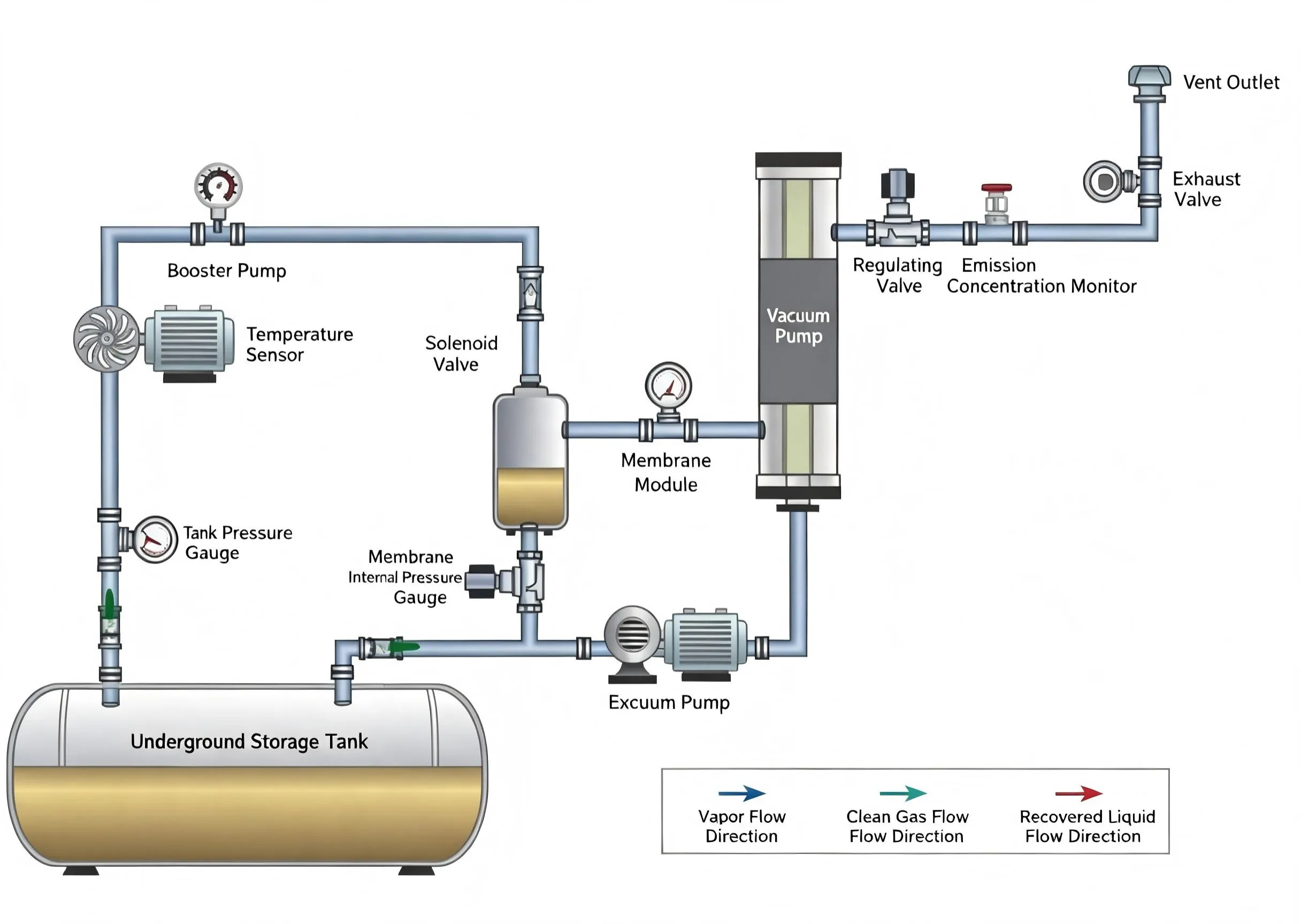
The cost of guessing either way
Servicing too rarely shows up as alarms, purity drift and shortened element life, and the repair bill arrives with downtime attached. Servicing too often sounds safe but has its own price: each opening is a chance for a reassembly error, and needless interventions consume budget that could buy monitoring. The framework exists precisely because both extremes cost money, and the logged middle path does not.
Frequently asked questions
Does climate really change the service interval that much?
Yes. Heat loads the condenser and thins condensate behavior, dust blinds elements early and coastal salt air attacks everything exposed. Units of the same model can justify intervals differing by half simply because of where they stand.
Can remote monitoring replace physical service?
Monitoring sharpens the schedule, it does not replace the hands. Sensors catch drift between visits, but drains, gaskets and fasteners still need eyes and wrenches. The best setups use monitoring to send the technician at the right moment rather than on a blind date.
Should service happen before or after peak season?
Before. A unit entering its busiest, hottest months with fresh elements and verified calibration sails through the peak, while one entering on a tired set of consumables spends the season drifting. Timing the full service just ahead of peak is the single cheapest reliability decision an operator makes.
Luoyang Wohong Petrochemical Equipment Co., Ltd. designs and manufactures vapor recovery units, membrane separation skids and condensers for fuel depots, terminals and retail sites. Contact us for duty assessment and equipment selection support.