
Every depot operator has watched a delivery that foams instead of filling quietly. The product arrives agitated, bubbles fill the tank headspace faster than vapor can leave, and within minutes the vapor line is carrying liquid droplets it was never asked to move. Foamy deliveries are not rare, they are a normal consequence of how fuel is loaded, transported and dropped, and the vapor side of the site simply has to be prepared for them.
Where the foam comes from
Foam at the fill point is entrained gas in the falling product stream. High drop rates, long falling distances, splash filling into an empty or low tank and fuel that has been churned through pumps and road travel all feed it. Some product batches foam more than others by nature of their blending, and hot weather lowers surface tension and makes the bubbles last. None of this is a fault of the receiving site, which is exactly why the site must tolerate it.
What foam does on the vapor side
| Effect | What the operator sees | What limits it |
|---|---|---|
| Liquid carryover into the vapor line | Wet coalescer elements, droplets at low points | Grade and slope away from the tank, well-placed knockouts |
| Spiking flow to the recovery equipment | Flowmeter readings jumping, alarms on the skid | Controls tuned for transient bursts, not just steady duty |
| Condenser load spikes | Condensate volume rising after deliveries | Condensate return sized for post-delivery waves |
| Membrane wetting risk | Recovery purity drifting after a wet event | Upstream liquid separation before the membrane stage |
| False high-level impressions | Level probes reading foam contact early | Probe placement reviewed against foam behavior |
Running a site that tolerates foam
The stations and depots that handle foamy deliveries calmly all share the same habits:
- Check coalescers and knockout vessels shortly after known foamy deliveries, not just on calendar intervals;
- Keep the vapor line graded so carried liquid drains back rather than pooling at equipment;
- Review recovery equipment logs after each drop to see how far the flow spiked and for how long;
- Drain condensate promptly after the delivery wave instead of letting it accumulate;
- Record which batches and weather conditions foam worst, so operators expect the event.
Equipment choices that forgive foam
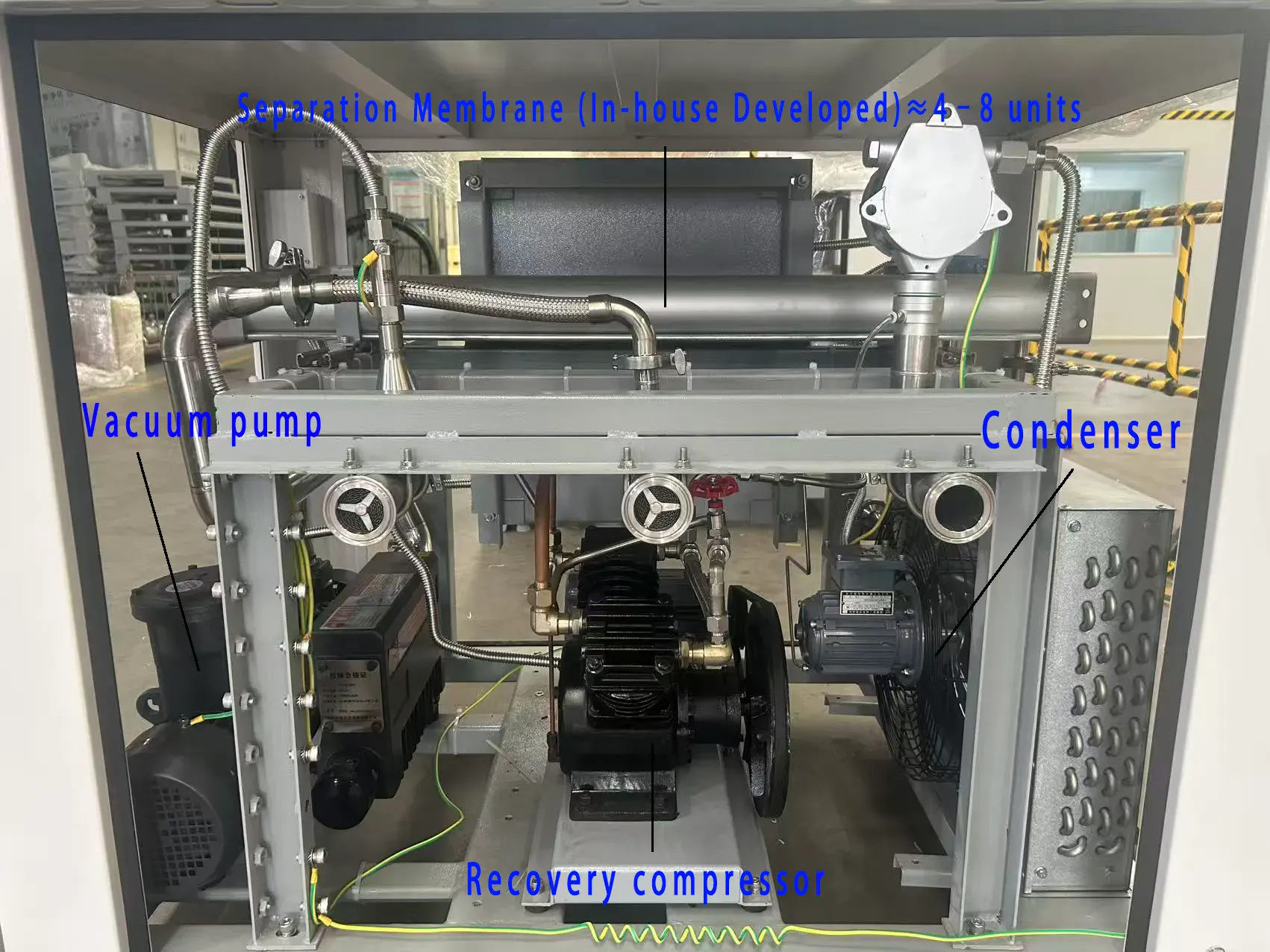
Vapor recovery equipment differs in how much foam abuse it tolerates. Units with a generous liquid separation stage ahead of the working core shrug off wet events that upset leaner designs. When comparing offers for a site with heavy delivery traffic, the separator volume and the drain arrangement deserve as much attention as the headline recovery figure, because on a foamy day those are what keep the unit running instead of alarming.
Frequently asked questions
Can foam damage a vapor recovery unit permanently?
A single foamy delivery rarely causes permanent damage; repeated wetting without drainage and inspection is what shortens element and membrane life. The risk is cumulative, which is why post-delivery checks matter more than any single event.
Should deliveries simply be slowed down?
Slower drops foam less, and where the delivery contract allows gentler rates the vapor side benefits immediately. But drop rate is negotiated commercially and varies by carrier, so the engineering answer remains a site that tolerates the foamiest expected delivery.
How quickly after a delivery should equipment be checked?
Within the same working day for sites with frequent drops. Condensate drains and coalescer condition tell the story while it is still fresh, and the log entry from that check becomes evidence for sizing any future separator upgrade.
Luoyang Wohong Petrochemical Equipment Co., Ltd. designs and manufactures vapor recovery units, membrane separation skids and condensers for fuel depots, terminals and retail sites. Contact us for duty assessment and equipment selection support.