
Self-service and unattended station formats keep spreading across fuel retail, and they quietly change what vapor recovery equipment is expected to do. A station with staff on every shift can absorb a blinking alarm light; a driver at the pump cannot, and an owner reading a dashboard from across town needs the equipment to speak plainly or not at all. The recovery hardware itself changes less than the way it must behave: more automation, more self-protection, and far clearer communication. Operators planning new sites or conversions are already writing these expectations into their equipment specifications.
Why Unattended Formats Pressure the Equipment Side
A traditional station has people who notice things: a hose left wrong, an unfamiliar noise, a wet patch near the recovery unit. An unattended site has customers focused on fueling and leaving. Every function that staffed sites cover informally, the equipment and its monitoring must cover formally. That shift does not make vapor recovery harder to engineer, but it moves weight from human attention to system design, and it rewards equipment that protects itself, reports honestly and fails loudly enough to be noticed from a distance.
What the Equipment Must Do Without Staff Nearby
The expectations cluster into a short list that appears in most modern specifications, and the steps below describe the operating reality sites aim for.
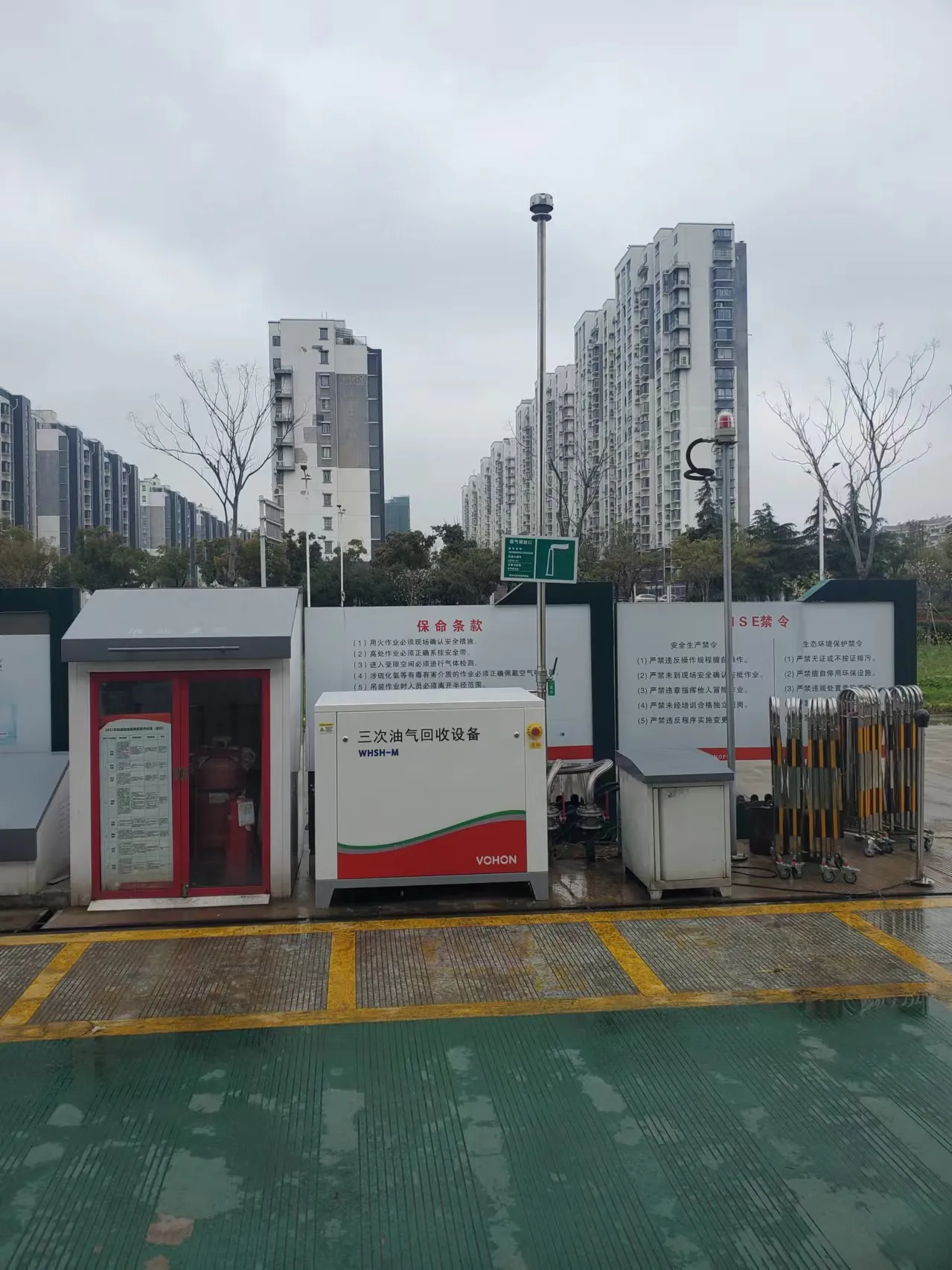
- Run the unloading recovery sequence automatically from connection to completion, without an attendant starting or supervising the process.
- Protect itself with reliable shutdowns on abnormal conditions, since no one is standing by to intervene manually.
- Report its status to a remote dashboard in plain categories, not just raw signals for specialists to decode.
- Keep a complete event history, so a service visit can reconstruct what happened without guessing.
- Guide any on-site responder, from a delivery driver to a visiting technician, with clear local indicators and instructions.
Alarms That Speak to People Who Were Not Trained on the Unit
Alarm design becomes a user interface question at unattended sites. A code and a red lamp meant something to a trained attendant; to a driver or a night security guard, it means nothing except that something is wrong. Formats moving this way increasingly expect alarms grouped by consequence, such as delivery can continue, delivery is paused, or the site needs a technician, with the same grouping mirrored on the remote dashboard. The change sounds small and is not: it decides whether a vapor recovery fault costs an hour or a day, because the first responder on site acts on what the panel tells them.
Comparing Staffed and Unattended Expectations
| Aspect | Staffed station norm | Unattended format expectation |
|---|---|---|
| Recovery start | Attendant confirms connection and start | Fully automatic sequence tied to the delivery |
| Fault response | Staff notice and call for service | Remote alert with consequence grouping and guidance |
| Daily checks | Walk-around habit covers small signs | Sensors and trend monitoring replace the walk-around |
| Records | Paper log, reviewed at service | Complete event history available remotely |
What This Trend Means for Equipment Buyers
Buyers specifying recovery equipment for unattended formats are asking different questions than a decade ago. Remote reporting is no longer an optional extra; event history depth is a selection criterion; alarm wording gets read during the demonstration instead of after the contract. Suppliers have responded with control systems built for exactly this duty, and the gap between units designed for attended sites and units designed for unattended ones shows most clearly in the first month of operation, when the staffed habits are absent and the equipment either stands on its own or does not. Networks converting sites learn to weigh this before the conversion, not after.
The Direction of Travel
The trend points one way: fewer people at the forecourt, more intelligence in the equipment room. Vapor recovery sits comfortably in that direction because its core functions were always automatable; what is changing is the expectation that the unit participates in site management, reporting, and even maintenance scheduling, rather than waiting for a visit. Operators who align their vapor recovery specifications with their station format strategy avoid the awkward middle ground, where a modern retail concept runs on equipment that still assumes an attendant is watching.
Do unattended sites need different vapor recovery hardware?
The core recovery technology is the same; the control, reporting and self-protection layers are what differ. Equipment designed for remote operation covers the unattended case, while older attended-site units may need control upgrades.
Can existing units be adapted for self-service formats?
Often yes, through control retrofits that add remote reporting and consequence-grouped alarms. The mechanical condition of the unit should be assessed first, since automation amplifies any underlying unreliability.
What is the first thing to check when converting a site?
Check how the recovery unit behaves during a full unloading with nobody present, then review its alarm outputs from the perspective of a driver or remote operator. The gaps found there define the retrofit scope.
Luoyang Wohong Petrochemical Equipment Co., Ltd. manufactures vapor recovery units suited to both attended and unattended station formats, with remote reporting and self-protecting control designs.