
Order books across the vapor recovery industry tell a consistent story this season: terminals in emerging markets are buying recovery equipment at a pace the trade has not seen before. The drivers differ by region, but the pattern repeats from one country to the next, and suppliers who track it are adjusting both product and process around what terminal buyers now ask for.
What is pulling the orders forward
Three forces stack. Environmental programs in several large economies have moved from voluntary frameworks to enforced vapor limits at loading racks. Fuel quality upgrades across the same markets increased the vapor volumes worth recovering, turning recovery from a cost into a product gain. And terminal modernization programs, often tied to expansion of storage capacity, are reaching the vapor stage after years spent on tanks and pumps first.
What terminal buyers ask for now
| Buyer priority | How it shows in tenders | What it rewards |
|---|---|---|
| Turnkey delivery | Single responsible supplier from skid to commissioning | Suppliers with installation and training capacity |
| Short outage windows | Installation plans fitted between loading schedules | Prefabricated skids and quick tie-ins |
| Local service capability | Training and spares commitments written into contracts | Suppliers with regional partners |
| Recovery accounting | Metered recovery figures tied to commercial reporting | Instrumented units with clean data output |
| Proof of performance | Site-specific duty cases rather than generic curves | Suppliers willing to model the actual terminal |
How delivery expectations changed
The most striking shift is schedule discipline. Terminal programs are financed on timelines, and a recovery unit that arrives late holds up the whole commissioning chain. Buyers now evaluate production lead time and shipping reliability as seriously as technical performance, and reference visits increasingly ask to see the factory floor, not only the finished skid. Suppliers who quote honestly on schedule are winning work on that answer alone.
How a terminal prepares for its first recovery order
Terminals coming to vapor recovery for the first time follow a preparation sequence that shortens the whole procurement:
- Measure the loading profile across several weeks, including product slate and batch sizes;
- Write the duty case honestly, since every offer that follows inherits its quality;
- Shortlist suppliers on installed references and schedule evidence, not datasheets alone;
- Plan the installation window with the loading schedule owner at the same table;
- Agree the acceptance figures, recovery rate and instruments, before the skid ships.
Where the momentum points next
The pipeline of projects suggests the current wave has years left in it. Storage expansions announced across several emerging markets have not yet reached their vapor stages, and each will. For equipment makers the task is capacity and local presence; for terminal owners it is choosing suppliers while their references are still verifiable. The window where both sides are learning the same lesson, that vapor recovery is now core terminal infrastructure rather than an accessory, is producing unusually fast deals.
Frequently asked questions
Are the new buyers focused on emission limits or product gain?
Both, and the best tenders quantify each. Enforcement creates the deadline, but the recovered product often carries the business case. Terminal managers increasingly present recovery figures alongside throughput in their reports, which says where the priority has landed.
Do emerging market terminals buy different equipment?
The core technology converges, but site conditions differ: hotter climates load condensers, varied product mixes stress membranes and thinner maintenance teams favor simpler, documented service routines. Successful offers are adjusted to those realities rather than trimmed-down copies of export units.
How can a terminal start the procurement correctly?
Begin with a measured duty case: throughput, loading patterns, product slate and climate. Suppliers respond very differently to a real duty case than to a nominal figure, and the quality of the technical offers follows directly from the quality of that first document.
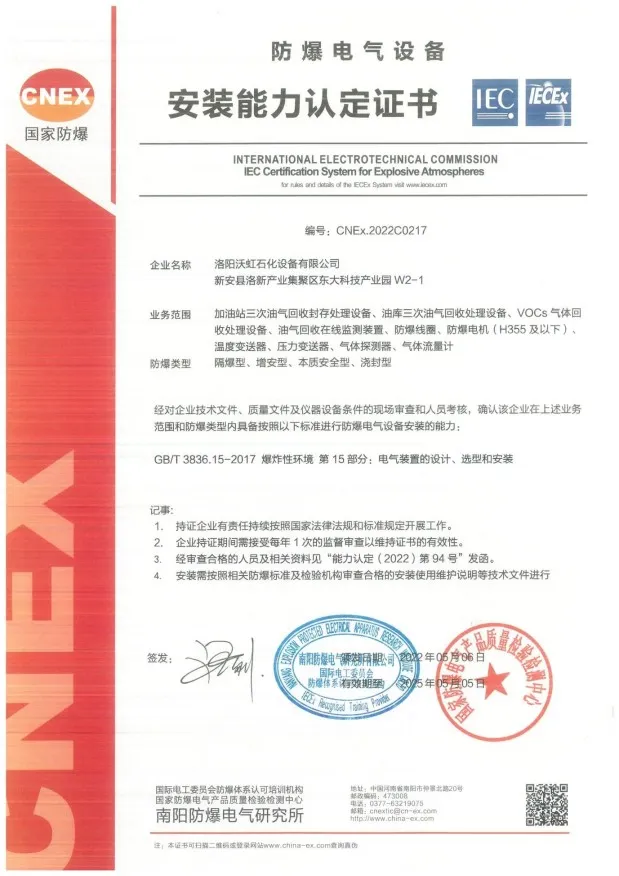
Luoyang Wohong Petrochemical Equipment Co., Ltd. designs and manufactures vapor recovery units, membrane separation skids and condensers for fuel depots, terminals and retail sites. Contact us for duty assessment and equipment selection support.