
A vapor recovery unit is fed by the tank ullage, and the tank ullage does not send one consistent mixture. A fresh delivery pushes rich, fuel-soaked vapor ahead of it. A quiet week of small dispensing events sends lean, air-heavy vapor. Temperature swings, fuel type and how recently the tank was filled all shift the concentration of what arrives at the unit’s inlet. Recovery equipment that behaves well all year is equipment whose operators understand that the feed is a moving target.
What concentration changes downstream
Rich vapor carries more condensable material, so the condensation stage sees a heavier load and produces more liquid. Membrane stages see a higher partial pressure of hydrocarbons, which is the driving force they run on, and their separation output rises with it. Lean vapor does the opposite: less condenses, less passes the membrane, and a larger share of what moves through the unit is air that merely traveled.
Neither condition is a fault. Both are normal. Trouble starts when the unit’s settings, or the operator’s expectations, are fixed to one end of the range.
Why the same unit seems to change personality
Sites often report that the unit “runs differently” after a delivery, or “has gotten worse” during a slow month. In most cases the unit is unchanged; the feed is. Recovery figures expressed as a fraction of handled vapor are especially sensitive: a lean feed makes the same absolute recovery look smaller, because the denominator grew with air that was always going to pass through.
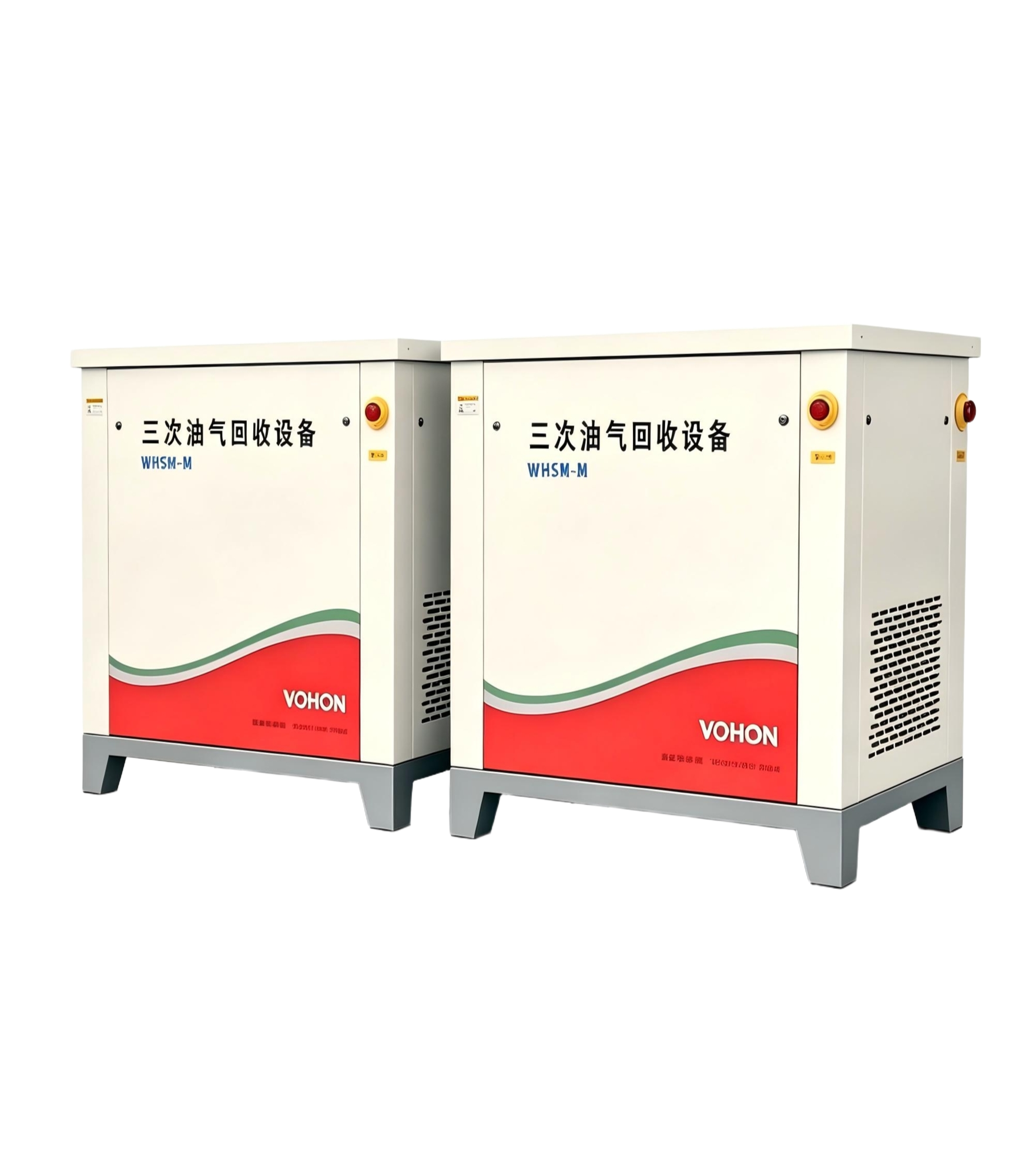
This is why useful records pair the recovery number with a note on what the tank farm was doing that week. The pair tells a coherent story; the bare number invites wrong conclusions.
Practical implications for operation
Settings and schedules should follow the feed’s rhythm. After a delivery, when vapor is richest, is the natural window for work that benefits from strong recovery. Extended idle periods call for attention to standing conditions rather than throughput. Alarms that fire on absolute values alone deserve a second look: a limit set for rich-feed conditions may flag perfectly normal lean-feed behavior, teaching the site to ignore alarms, which is the worst outcome of all.
There is also a purchasing angle to the moving feed. A site that understands its concentration profile, rich after deliveries, lean in quiet periods, sizes its equipment against the whole range rather than against a single worst moment, and it evaluates offers more honestly, because it can ask how each proposed unit behaves at both ends of the feed it actually has.
A short routine keeps the feed in view instead of forgetting it between surprises.
- Note the week’s events in the log: deliveries, throughput, weather;
- Read each recovery figure against those events, never in isolation;
- Schedule attention-heavy checks after deliveries, when vapor is richest;
- Review any alarm limit that fires only in one feed regime;
- Re-baseline the record whenever the fuel blend changes.
Matching expectations to the feed
| Feed condition | Unit behavior | Sensible response |
|---|---|---|
| Just after a delivery | Heavy load, strong condensation, high recovery | Expect the best numbers of the month |
| Quiet week, small events | Lean feed, lower absolute recovery | Judge trends, not single values |
| Hot spell | Richer ullage, more vapor volume | Watch condensate handling capacity |
| Cold snap | Leaner stream, less condensation | Expect softer numbers, not a fault |
| Fuel blend changed | Different volatility, new baseline | Re-baseline the log before judging |
Feed concentration is the hidden variable behind many “mysterious” recovery stories. Operators who track it stop chasing faults that were really just physics, and start spotting the genuine ones faster, because the normal variation is understood and bounded. The unit does not need to be rebuilt to handle a moving feed; it needs operators who read the feed alongside the gauges.
Frequently asked questions
Does lean vapor mean the unit is working badly?
No. Lean vapor simply gives the separation stages less to work with. Judged against the feed that actually arrived, a unit handling lean vapor may be performing exactly as designed while its headline recovery number looks unimpressive.
How can a site see the feed concentration without lab work?
Indirectly and reliably: event history (deliveries, throughput), temperature and fuel type. Those three explain most of the variation, and pairing them with recovery figures in the log is enough for sound day-to-day judgment.
Should alarm limits be adjusted for feed conditions?
Limits should protect the equipment, and those belong to the design. Interpretive alarms, the ones meant to flag performance problems, should be read with feed context so that normal variation does not train the site to dismiss them.
Luoyang Wohong Petrochemical Equipment Co., Ltd. builds membrane-based vapor recovery units and condensation skids for fuel stations and terminals, with sizing support, spare parts and service documentation. Contact us to discuss your site.