
Discussions of membrane vapor recovery usually end at separation: vapor in, hydrocarbon-rich stream returned, cleaner gas out. The cleaner side, the permeate, is often described as if it were nothing at all, and that shortcut causes trouble in operation. The permeate of a working membrane unit is not clean air. It still carries vapor at a concentration far below the feed but well above zero, and how that stream is routed and maintained shapes both the unit’s recovery efficiency and its day-to-day behavior.
What the permeate actually is
A membrane separates by selectivity, not by magic: small, soluble vapor molecules pass through the membrane wall faster than air. The stream on the permeate side is therefore depleted of hydrocarbons relative to the feed, not freed of them. Its composition depends on the feed, the membrane stage arrangement and the pressure difference across the membrane, which is why it changes across the operating day as the feed changes.
Treating the permeate as if it were vent-safe air, when it is a dilute vapor stream, is the root of most routing mistakes.
Routing options and what each implies
The common routing returns the permeate to a point where its residual hydrocarbons still have value or can be managed: back toward the tank ullage through a controlled connection, or into the suction of an earlier recovery stage where the load is handled again. Each option returns some of the residual to the process rather than releasing it, which is the direction recovery efficiency pushes in.
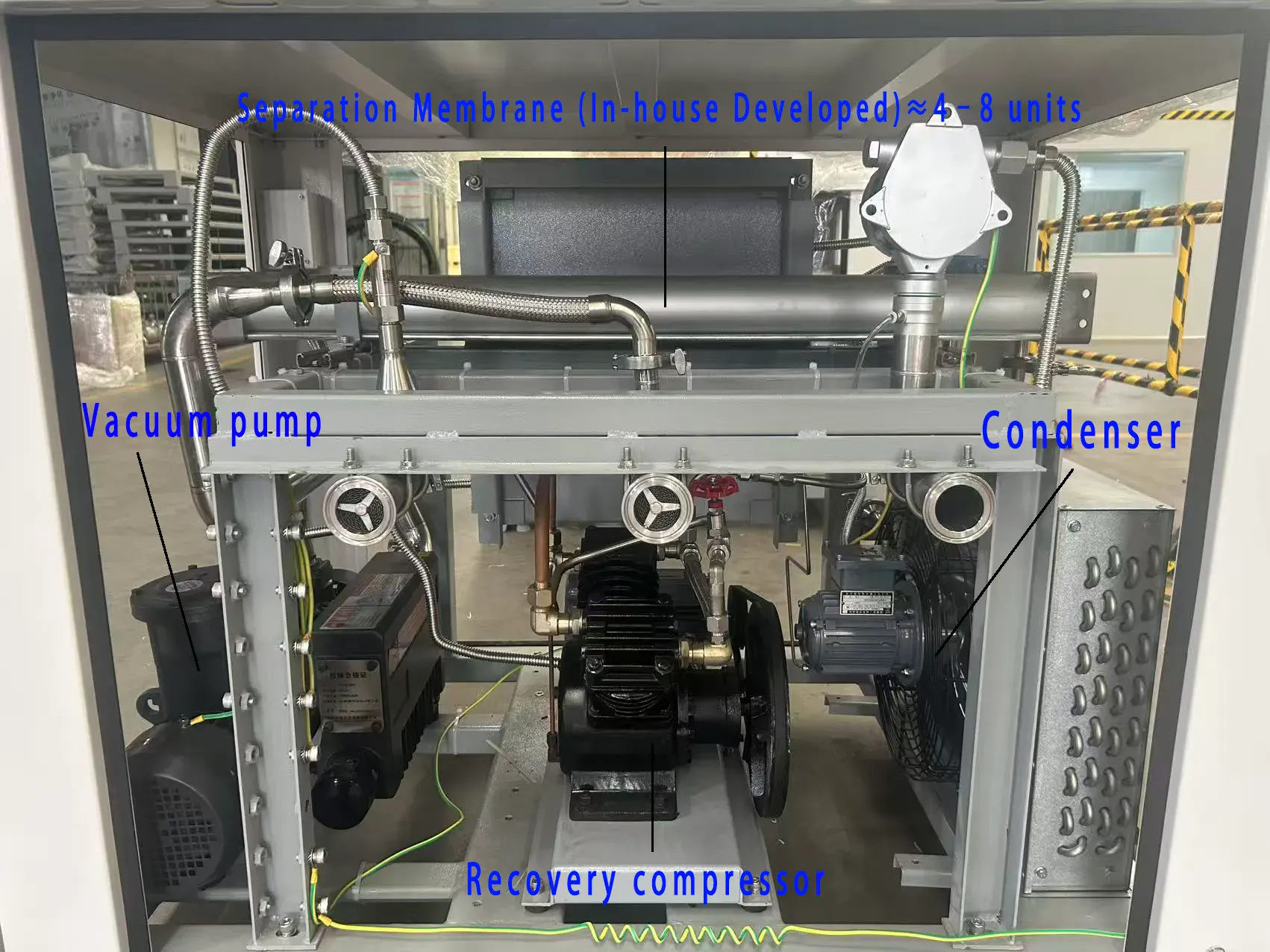
Direct release, where a site’s design permits it, is the simplest route but the least forgiving of neglect: any drift in membrane performance shows up immediately in what leaves the stack, with no second pass to dilute the consequence.
What keeps the clean side healthy
The permeate side has its own plumbing, and its own failure modes. Connections and hoses on this side age like any other; a leak here draws air into the membrane’s low-pressure side, changing the driving force across the membrane and quietly lowering selectivity’s real-world effect. Blockages are quieter still: a restricted permeate path builds back-pressure that the membrane sees as a smaller pressure difference, and recovery falls without any alarm that names the cause.
Checks that fit a service visit
- Trace the permeate route from membrane housing to its return point and confirm every connection is sound;
- Check the permeate path for restrictions, kinked hoses and standing liquid;
- Confirm the return connection actually flows, not just exists;
- Compare recovery figures against the feed log to see whether the clean side is diluting results;
- Record permeate-side condition in the service sheet so the next visit has a baseline.
Symptoms that point to the clean side
| Symptom | Permeate-side cause | Check |
|---|---|---|
| Recovery falls, feed and vacuum normal | Back-pressure on the permeate path | Trace route for restrictions |
| Membrane output seems weaker | Air leak into the low-pressure side | Connection tightness along the route |
| Odor near the unit | Residual vapor escaping a joint | Hose and clamp condition |
| Results vary with weather | Condensate collecting in the route | Low points and drainage |
| No record of the clean side | It is absent from service checks | Add it to the checklist |
The permeate side rewards a simple change of habit: stop calling it “clean” and start treating it as a dilute vapor line that belongs to the recovery process. Routed deliberately, kept tight and free-flowing, and included in routine checks, it stays a quiet part of the system. Left to look after itself, it becomes the leak path nobody suspected and the back-pressure nobody measured, and both cost recovery efficiency that the membrane itself was never losing.
Frequently asked questions
Why not vent the permeate straight out?
Where the site design permits it, venting is simple, but the stream still carries hydrocarbons and every unit of it released is recovery efficiency given away. Returning it to the process keeps both the emission and the loss lower.
How does a permeate leak differ from a feed-side leak?
Direction. A feed-side leak loses rich vapor; a permeate-side leak draws air into the membrane’s low-pressure side and weakens the driving force. Both hurt recovery, and they show different symptoms in the log.
Should the permeate route appear in the as-built documents?
Yes, always. It is a working part of the recovery circuit, and future troubleshooting starts with knowing exactly where the stream goes and what stands between the membrane and its return point.
Luoyang Wohong Petrochemical Equipment Co., Ltd. builds membrane-based vapor recovery units and condensation skids for fuel stations and terminals, with sizing support, spare parts and service documentation. Contact us to discuss your site.