
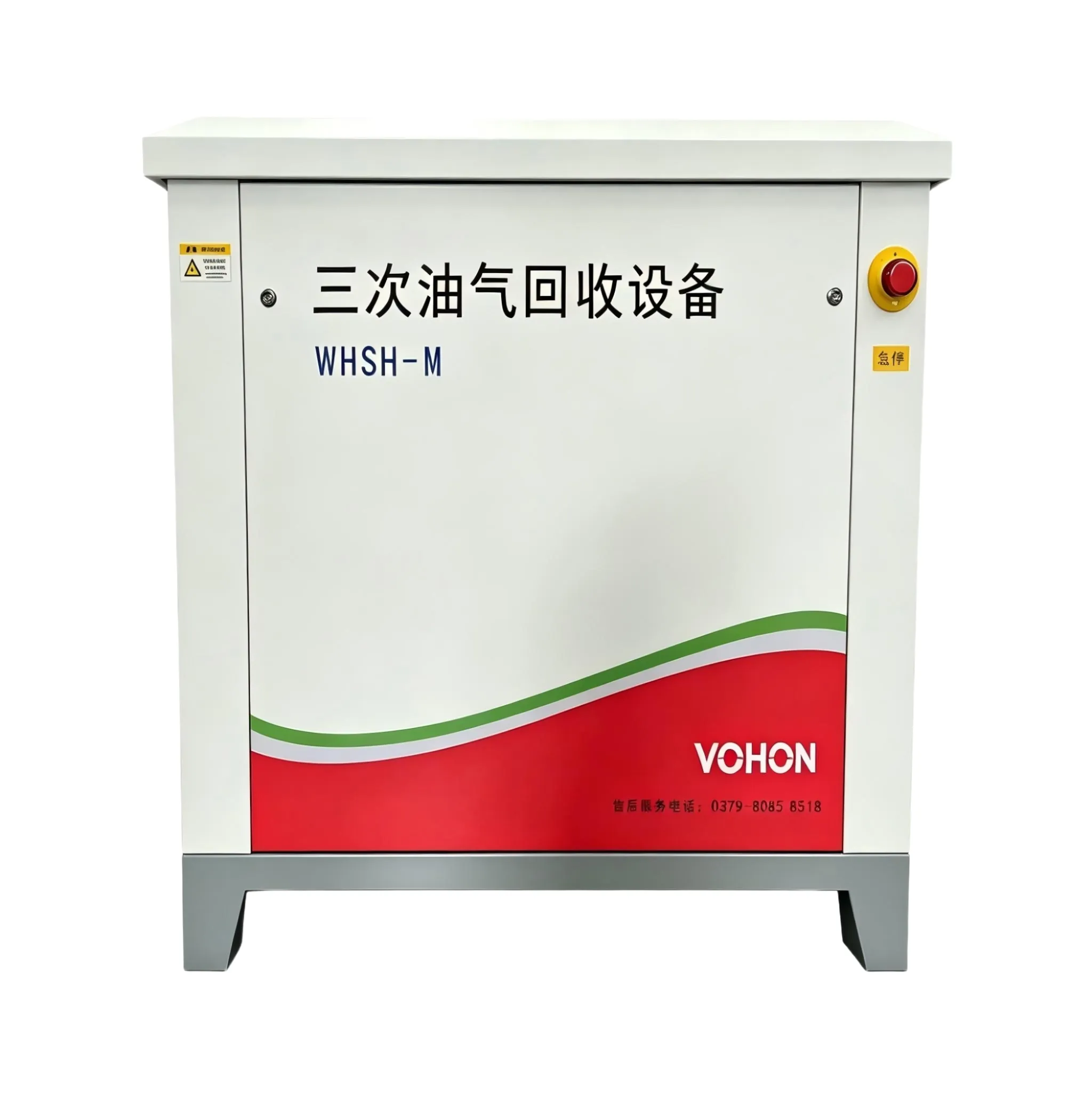
The WHSH-M stage III vapor recovery unit starts and stops automatically based on tank pressure, which means the pressure thresholds programmed into the PLC determine how often the unit runs and whether it captures vapors before they escape through the breather valve. Getting these settings right matters — set the start threshold too low and the unit runs constantly; set it too high and vapors vent through the valve before the unit kicks in.
Start Pressure Threshold
The unit activates when tank pressure rises above the configured start point. During fuel unloading, the tank headspace fills with displaced vapor and pressure climbs rapidly. The start threshold should be set below the breather valve opening pressure, so that the unit begins recovering vapors before the valve opens and releases them to atmosphere. If the start threshold is set at or above the valve opening pressure, the breather valve vents first and the unit only cleans up what is left.
Shutdown Pressure Threshold
Once the compressor and membrane system have pulled the tank pressure back down to the shutdown threshold, the unit switches to standby. The gap between start and shutdown is the operating band. A wider band means fewer on-off cycles but a wider pressure swing inside the tank. A narrower band keeps pressure tighter but cycles the compressor more frequently, which wears the mechanical components faster.
What Happens Between Start and Shutdown
When the unit starts, the compressor runs and draws vapor from the tank headspace. Compression raises the vapor pressure and temperature, then the air-cooled heat exchanger drops the temperature and condenses a portion of the hydrocarbons into liquid. The gas-liquid separator sends the liquid back to the tank, and the residual gas moves to the membrane module. Hydrocarbon molecules permeate through the membrane and return to the tank; air stays on the feed side and exits through the vent. This process continues until the pressure sensor reads the shutdown threshold.
Adjusting the Settings
Pressure thresholds are configured through the PLC human-machine interface on the control panel. The default settings from the factory are calibrated for typical underground tank installations, but they can be adjusted if the station has unusual tank geometry, longer piping runs, or frequent unloading schedules. Any adjustment should be made by qualified personnel who understand the relationship between the breather valve pressure rating and the recovery unit thresholds. After changing a setting, observe the unit through a couple of unloading cycles to confirm it starts early enough and shuts down at the right pressure.
Troubleshooting Pressure Behavior
If the unit runs continuously, check whether the shutdown threshold is set too low, or whether there is a source of vapor entering the tank that the unit cannot keep up with — such as a leaking seal or a failed secondary recovery pump. If the unit never starts, verify the start threshold against the actual breather valve opening pressure, and check that the pressure sensor itself is calibrated. A sensor that reads low will never trigger the unit even when pressure is genuinely high.