
When a station vapor tightness test fails, the cause is usually one of a handful of familiar places: a dispenser vapor coupling, a access port cap, a drain valve left open, or a joint that was disturbed during recent work. The test itself rarely lies. If pressure or vacuum will not hold, there is a path for air, and a disciplined search from the dispenser back toward the tank finds it faster than any amount of guessing.
What the Test Actually Checks
A tightness test seals the vapor path and then watches whether the pressure or vacuum inside it drifts. The vapor path runs from the vapor return connections at the dispensers, back through underground lines, into the tank ullage, and onward to the vapor recovery equipment. If the reading holds, every joint, seal and valve along that route is doing its job. If it drifts, air is entering or leaving somewhere, and the rate of drift often hints at how big the opening is. A slow drift suggests a weeping seal; a fast collapse suggests something obvious like an open port.
The Usual Suspects
Field experience keeps returning to the same short list:
- Dispenser vapor couplers and their seals, especially after nozzle impacts or recent service.
- Access port caps and drain plugs on the tank compound, sometimes left loose after a delivery or inspection.
- Test ports and gauge connections whose valves were not fully closed after the last use.
- Joints disturbed by recent work: a new dispenser foot, a relocated line, or repairs near the tank.
- Aging hose sections and their end fittings, where the cover has cracked near the ferrule.
Narrowing the Zone
Rather than walking the whole site at random, split the path into sections and test the symptom against each:
| Observation during test | Likely zone | First check there |
|---|---|---|
| Reading collapses almost immediately | Dispenser end or an open port | Coupler seats, port caps, test valves left open |
| Slow steady drift | Buried joints or tank fittings | Recent work records, tank compound fittings, spool joints |
| Drift appears only in certain conditions | Seal affected by temperature or wet soil | Compare readings at different times; inspect joints in wet areas |
| Passed before, fails after work | The area where work happened | Re-inspect every joint the crew touched, however small |
That last row is the quiet one: most failures follow human activity, not material age. Ask what changed before asking what broke.
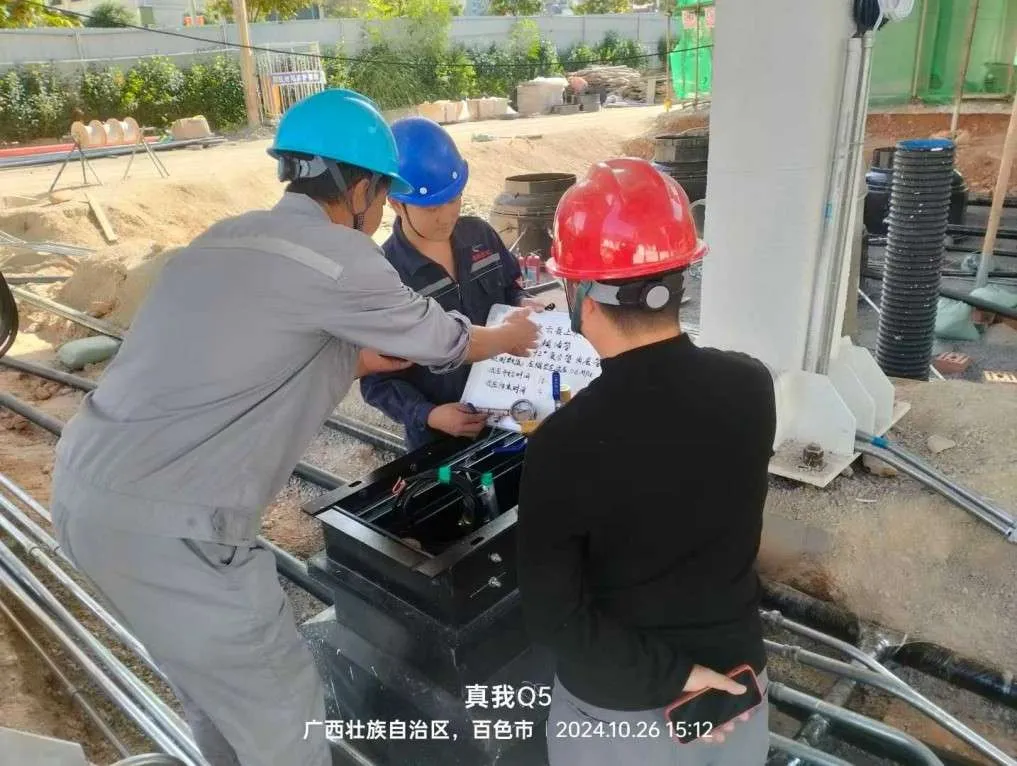
A Search Routine That Works
- Close the path into the recovery equipment first, so the equipment’s own valves are excluded from the test.
- Pressurize or evacuate the line and note the drift rate as your baseline.
- Start at the dispensers: check coupler seats and blank any suspicious connection, then retest.
- Move to the tank compound: port caps, drain plugs, gauge lines, one at a time, retesting after each change.
- Isolate buried sections with the spool pieces or test tees the system provides, halving the search area with each split.
- When the leaking section is found, soap solution or a dedicated detector pins down the exact joint.
After the Repair
Fixing the joint is not the end. The full test must be repeated and passed as a whole, because repairs sometimes disturb a neighboring joint while being made. Record the leak location, the repair made, and the passing readings in the station’s test log. A history of where leaks appear is the best guide to which fittings on this site deserve closer attention at the next scheduled inspection.
Frequently Asked Questions
Can weather affect the test result?
It can influence the reading, since vapor pressure in the tank and soil temperature both move with the weather, which is why tests compare drift over time rather than a single snapshot. A genuine leak drifts steadily regardless of conditions.
How often should tightness be tested?
Follow the schedule the station’s operating rules require, and always retest after any work that opened the vapor path. Sites with a leak history usually tighten their interval rather than wait.
Is a small drift safe to ignore?
No. A small leak grows: seals dry, joints work loose, and vapors escape the path they were designed for. Small drifts are exactly the stage where the fix is cheapest.
Luoyang Wohong Petrochemical Equipment Co., Ltd. supplies vapor recovery units and membrane separation skids for fuel stations, and supports operators with vapor path diagnostics and leak testing practice.