
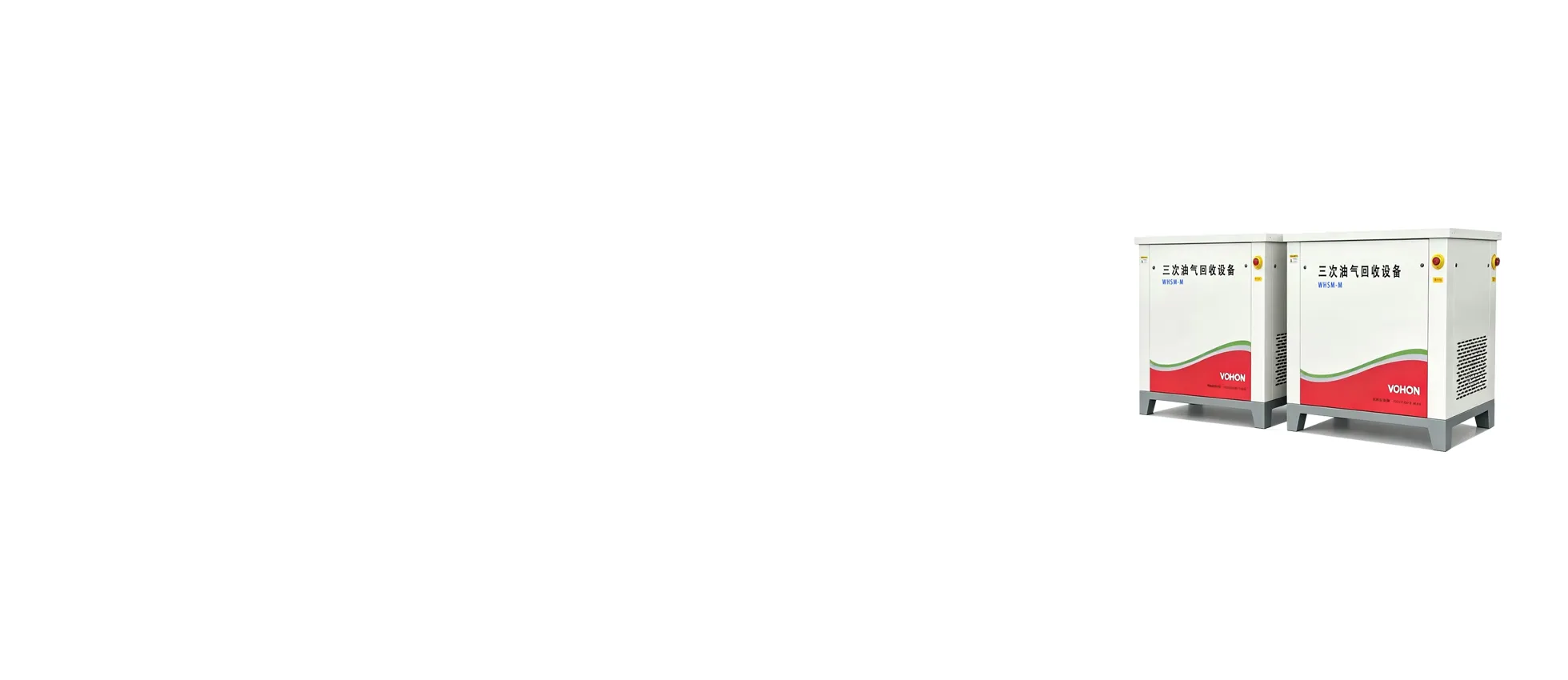
For fuel station operators worldwide, managing gasoline vapor is both an environmental responsibility and a business opportunity. A Stage III vapor recovery unit (VRU) is the key to capturing fugitive emissions during vehicle refueling and storage tank operations. The most advanced solution on the market today is an air-cooled membrane VRU that not only captures vapor but also converts it back into liquid fuel, delivering measurable economic and compliance benefits.
Stage III vapor recovery refers to the process of recovering gasoline vapors that escape from the vehicle’s fuel tank during refueling. These vapors contain valuable hydrocarbons that, if released, contribute to air pollution and represent a direct loss of product. A vapor recovery unit designed for Stage III applications addresses this by creating a closed loop system that safely captures, processes, and returns the vapor to the fuel supply.
The air-cooled membrane VRU stands out for its innovative design. Unlike traditional systems that rely on water cooling or complex refrigeration loops, this unit uses ambient air to cool the membrane separation process. This makes it ideal for service stations in areas with scarce water resources or extreme climates, as it requires minimal utilities and has a lower operating footprint. The membrane itself is a selectively permeable barrier that separates hydrocarbons from air, allowing clean air to be vented while concentrating the vapor for recovery.
At the heart of the system is a two-stage compression and condensation process paired with membrane separation. The vapor is first compressed, raising its pressure and temperature. It is then cooled in an air-cooled condenser, where a significant portion of the hydrocarbons condenses into liquid fuel. The remaining vapor, which still contains hydrocarbons, is sent to the membrane module. The membrane separates the hydrocarbon-rich stream from the inert air, with the rich stream being recycled back to the compressor inlet for further recovery. The lean air stream is safely vented, meeting stringent emission requirements. In practice, the overall processing efficiency of this system is excellent, with hydrocarbon recovery rates exceeding 99% and treatment efficiency consistently above 95%.
One of the most compelling reasons for fuel station operators to invest in a Stage III vapor recovery unit is the direct economic return. Every cubic meter of gasoline vapor contains about 0.7 to 0.9 liters of liquid fuel equivalent. Over a busy high-volume station, this can amount to thousands of liters of fuel lost each year. By converting these vapors back into liquid fuel, the VRU turns a compliance cost into a revenue stream. Many operators report that the system pays for itself within a few years solely through recovered fuel savings.
Beyond fuel savings, the air-cooled membrane VRU offers operational advantages. Its modular design requires minimal installation space and can be integrated into existing fuel dispensing systems without major civil works. The air-cooling mechanism eliminates the need for continuous water supply and avoids the risks of freezing or scaling associated with wet cooling towers. Maintenance is straightforward, with membrane modules designed for long service life and simple replacement. The system operates automatically with remote monitoring capability, allowing station managers to track performance and receive alerts in real time.
From an environmental perspective, a Stage III vapor recovery unit significantly reduces volatile organic compound (VOC) emissions at the service station. This helps operators comply with increasingly strict local and international air quality regulations. The system ensures that the vapor released from storage tanks and vehicle refueling is treated to a level that meets the required standards for clean air discharge. With the membrane VRU, the output air is virtually free of hydrocarbons, drastically lowering the station’s carbon footprint and improving the safety profile for employees and customers alike.
The air-cooled membrane VRU is especially well-suited for modern service stations that handle both ordinary gasoline and blended fuels with higher volatility. The system’s robust design handles varying vapor loads and compositions without compromising performance. Whether the station is located in a hot desert climate or a cold temperate region, the air-cooled system adapts by automatically adjusting its operating parameters to maintain optimal recovery efficiency.
When evaluating vapor recovery options, fuel station operators should consider total lifecycle cost, reliability, and the ability to meet evolving regulations. The air-cooled membrane VRU excels in all these areas. It requires less energy than competing systems because the air-cooled condenser and membrane unit operate efficiently without the burden of water treatment or chiller systems. This translates to lower electricity bills and reduced maintenance downtime.
Implementing a Stage III vapor recovery unit also future-proofs the service station. As emission standards tighten around the world, having a high-efficiency recovery system in place ensures that the station remains compliant for years to come. Moreover, many governments offer incentives or favorable treatment for early adopters of advanced vapor recovery technologies. The recovered fuel contributes to the station’s bottom line, and the environmental performance enhances the brand image among eco-conscious consumers.
In conclusion, the air-cooled membrane vapor recovery unit represents the next generation of Stage III vapor recovery for service stations. By converting vapor loss back into liquid fuel, it delivers tangible financial returns, superior operational flexibility, and outstanding environmental performance. For global fuel station operators seeking a dependable, cost-effective, and compliance-ready solution, this VRU is the optimal choice. Investing in such a system is not just about meeting regulations; it is about transforming a hidden loss into a valuable resource while demonstrating a commitment to sustainable fueling.