
Depots grow bay by bay, and the vapor recovery question arrives the same way: can the unit bought for one position stretch to serve the neighbor, and the one after that? The answer is often yes, and just as often yes with conditions. Sharing works when the vapor flows are understood as a system rather than summed on paper, and it fails in predictable ways when they are not.
When one unit is genuinely enough
Unloading events rarely overlap as much as planners fear. Where arrivals are staggered, a unit sized for the busiest single unloading, with margin for the vapor surge that follows liquid transfer, can serve several bays through a manifold. The design question is not how many bays exist but how many unload at once, and for how long. A depot that runs one delivery at a time almost all day needs one unit, whatever the bay count says.
What the manifold has to get right
The manifold is where shared systems succeed or quietly underperform. Each connection adds length, joints and pressure loss, and the geometry decides whether vapor arrives at the unit evenly or in slugs. Good shared layouts keep runs short and generously sized, slope toward collection points, and give each bay isolation valves so one connection can be worked on without idling the whole system. Poor layouts make every unloading pay for the pipes, in the form of stretched run times.
The operational rules that keep sharing honest
- Record unloading overlap honestly for a month before sizing anything;
- Keep isolation valves at each bay tested and accessible;
- Watch run times per delivery as bays are added, not just total runtime;
- Agree dispatch rules for peak windows before the summer season arrives;
- Review the duty numbers annually as traffic grows.
Choosing between one shared unit and dedicated units
| Consideration | One shared unit | Unit per bay |
|---|---|---|
| Capital cost | Lower hardware total | Duplicated equipment |
| Duty during one unit fault | All bays affected | Only one bay affected |
| Best fit | Staggered arrivals | Heavy simultaneous unloading |
| Maintenance footprint | One skid, one location | Several skids to service |
| Growth path | Manifold sized ahead | Add units as bays open |
Planning for the depot the site will become
The most expensive shared-system mistake is sizing for the depot that exists today. Manifolds are cheap to enlarge at design time and disruptive to enlarge after, so the honest forecast, even an uncertain one, belongs in the sizing meeting. A unit chosen with a clear view of future bay count either grows into its manifold or hands over cleanly to bigger hardware, and both outcomes cost less than a retrofit discovered in July.
Frequently asked questions
How many bays can realistically share one unit?
There is no fixed number, because overlap decides everything. Sites with staggered deliveries share several bays comfortably; sites where trucks queue to unload at the same hour need dedicated capacity. The overlap log, not the bay count, gives the answer.
What happens when two unloadings do overlap?
The unit sees combined vapor flow and runs longer to clear it, which is fine occasionally and a design problem when it becomes routine. Dispatch staggering is the cheapest fix; hardware follows if the overlap is structural.
Does sharing affect recovery efficiency?
Only if the manifold makes the unit work harder than it should. A well-sized shared system holds efficiency across all bays; a starved or oversized one shows it in stretched run times long before the emissions numbers move.
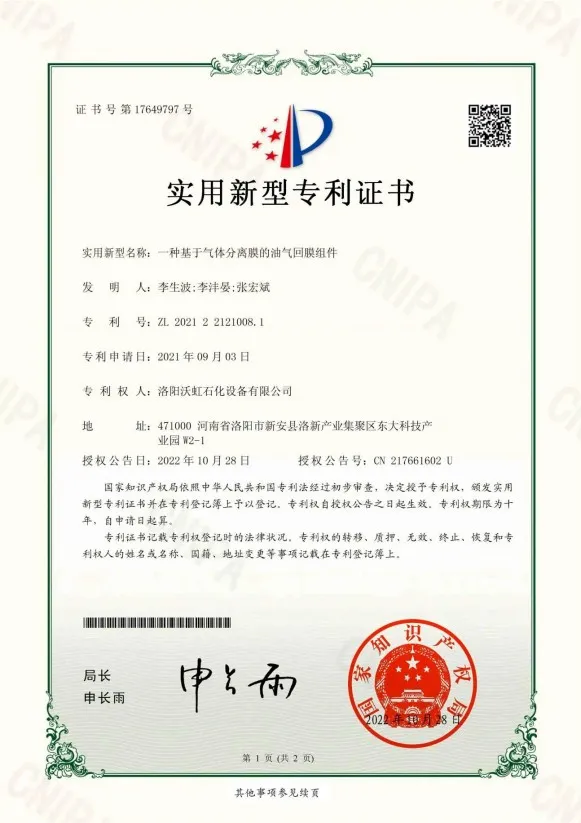
Luoyang Wohong Petrochemical Equipment Co., Ltd. designs and manufactures vapor recovery units, membrane separation skids and condensers for fuel depots, terminals and retail sites. Contact us for duty assessment and equipment selection support.